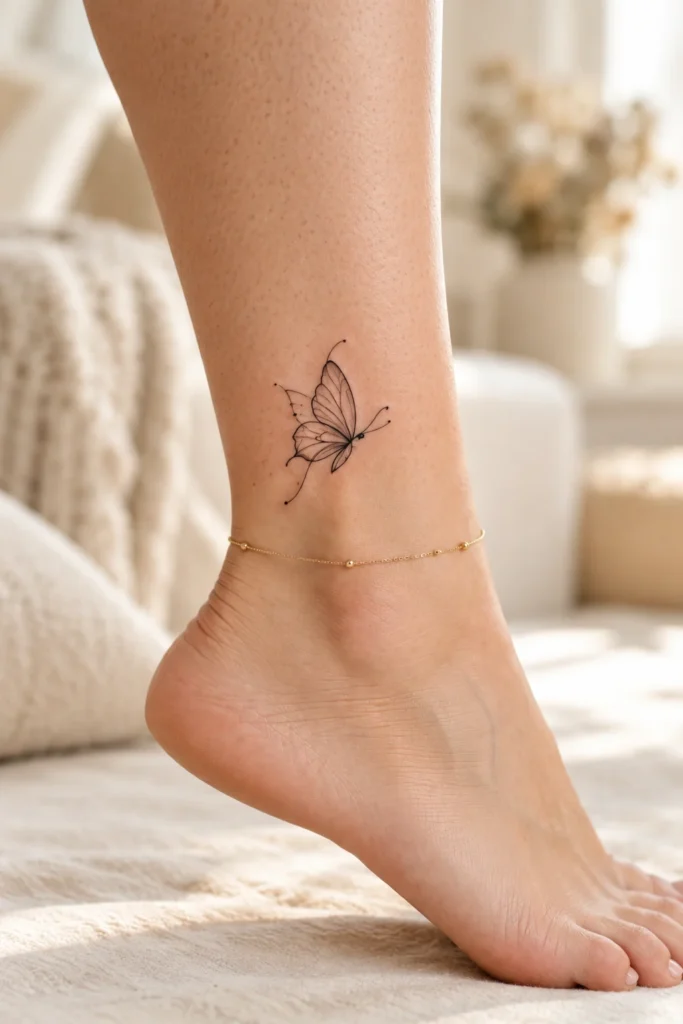
| Defining detail | Side-view upward wing |
| Placement shown | Outside ankle |
| Styling detail | Anklet is separate jewelry |
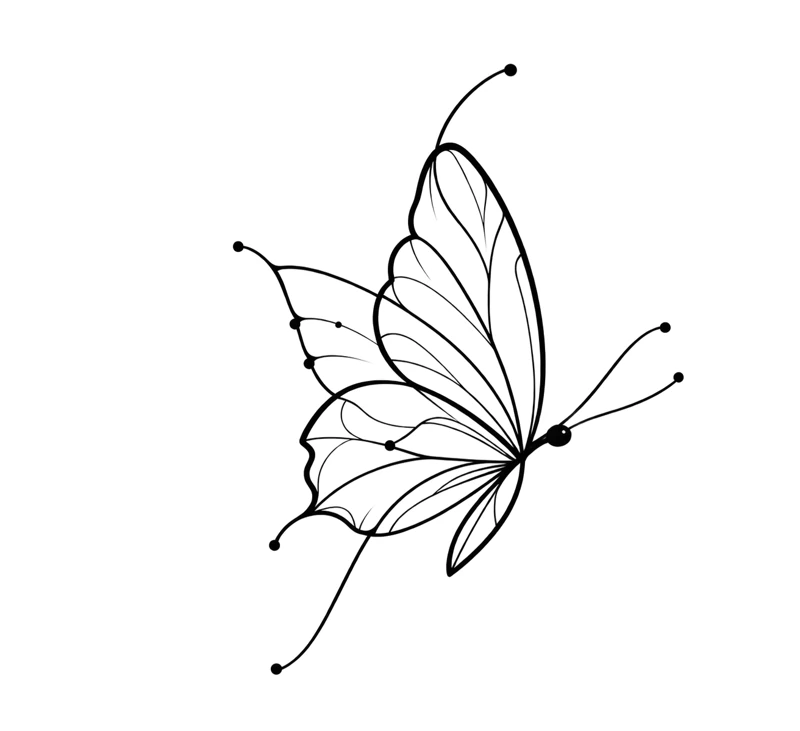
| Measure | Include dots and trailing lines |
See the direction before the detail
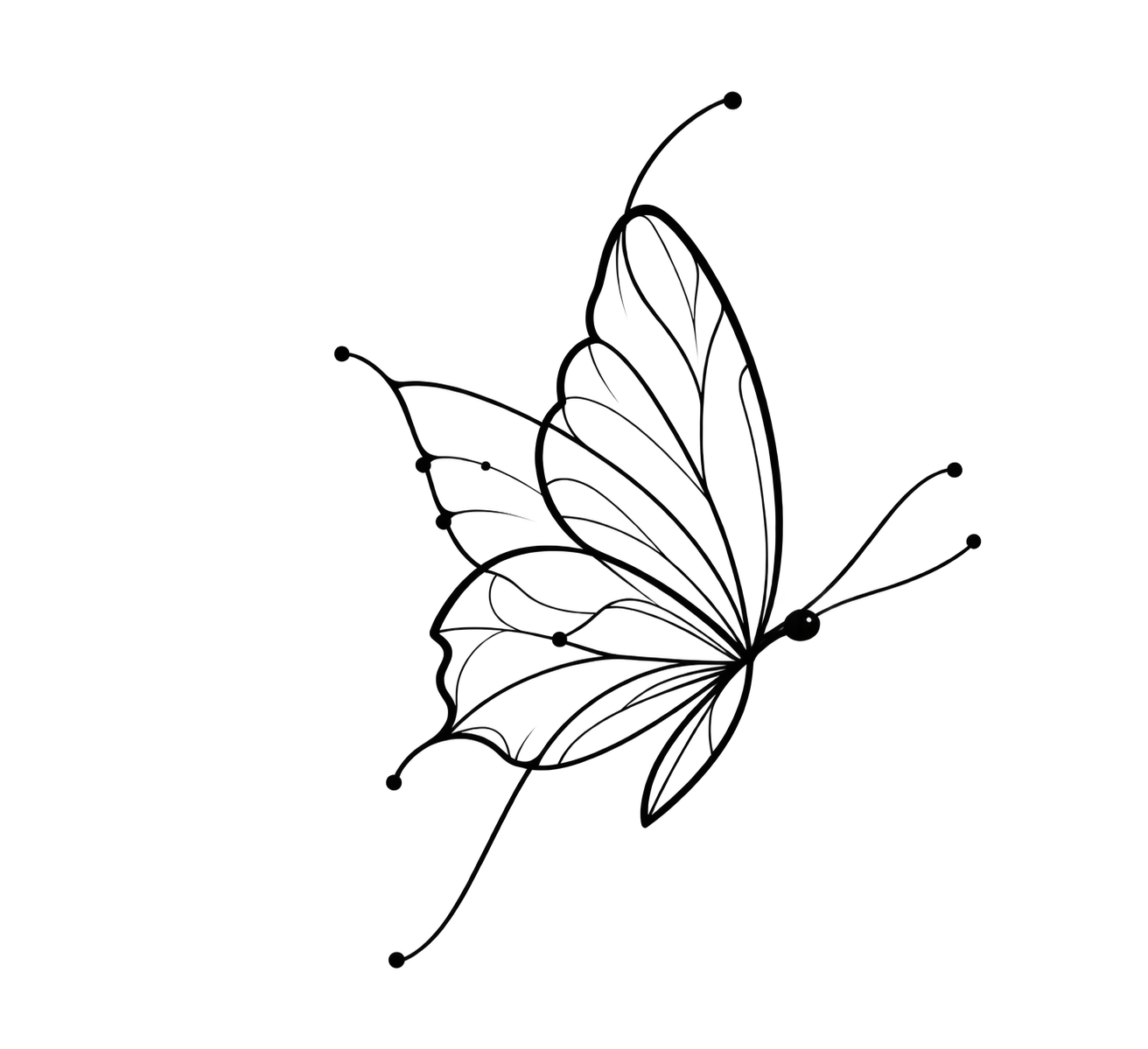
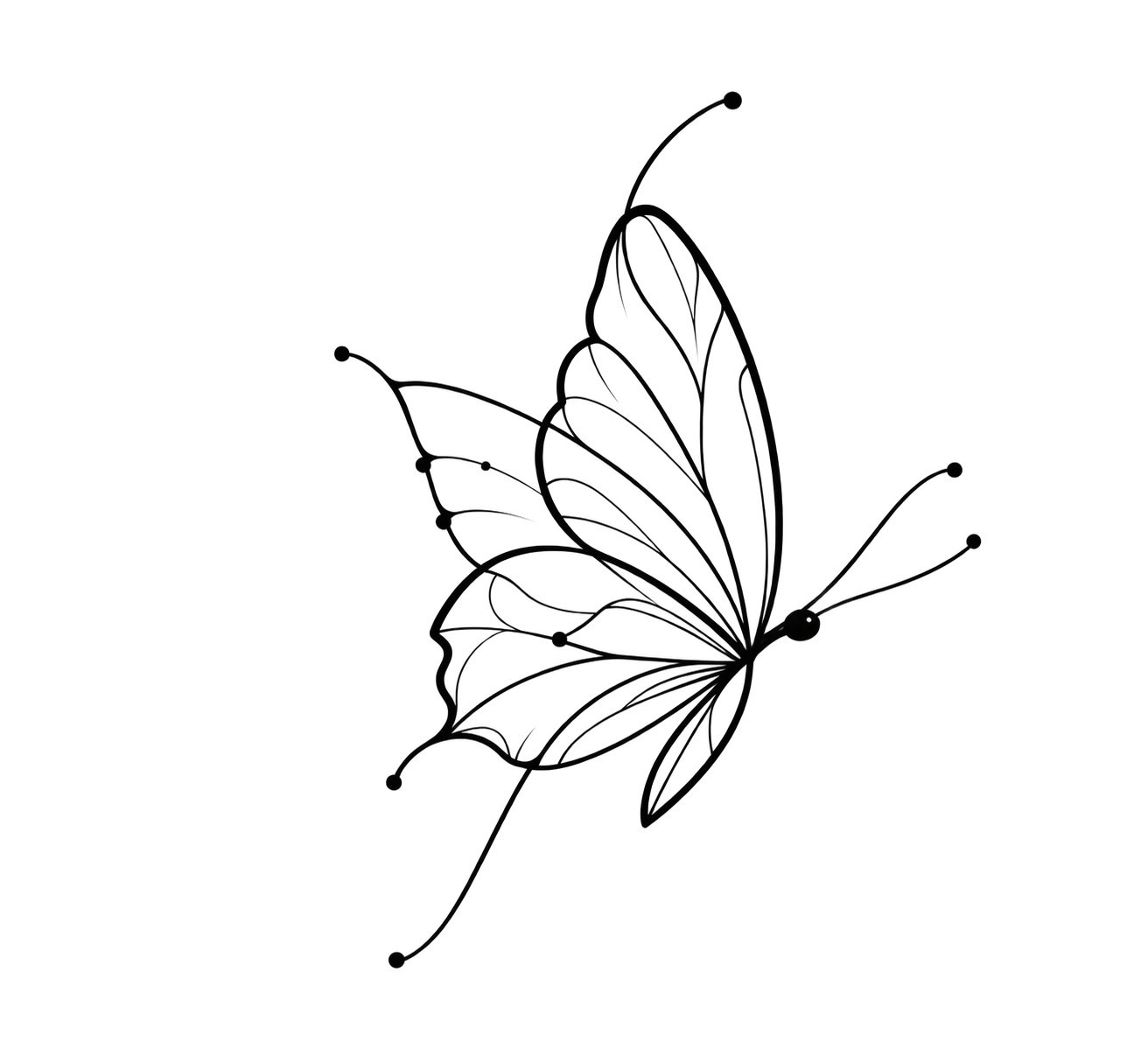
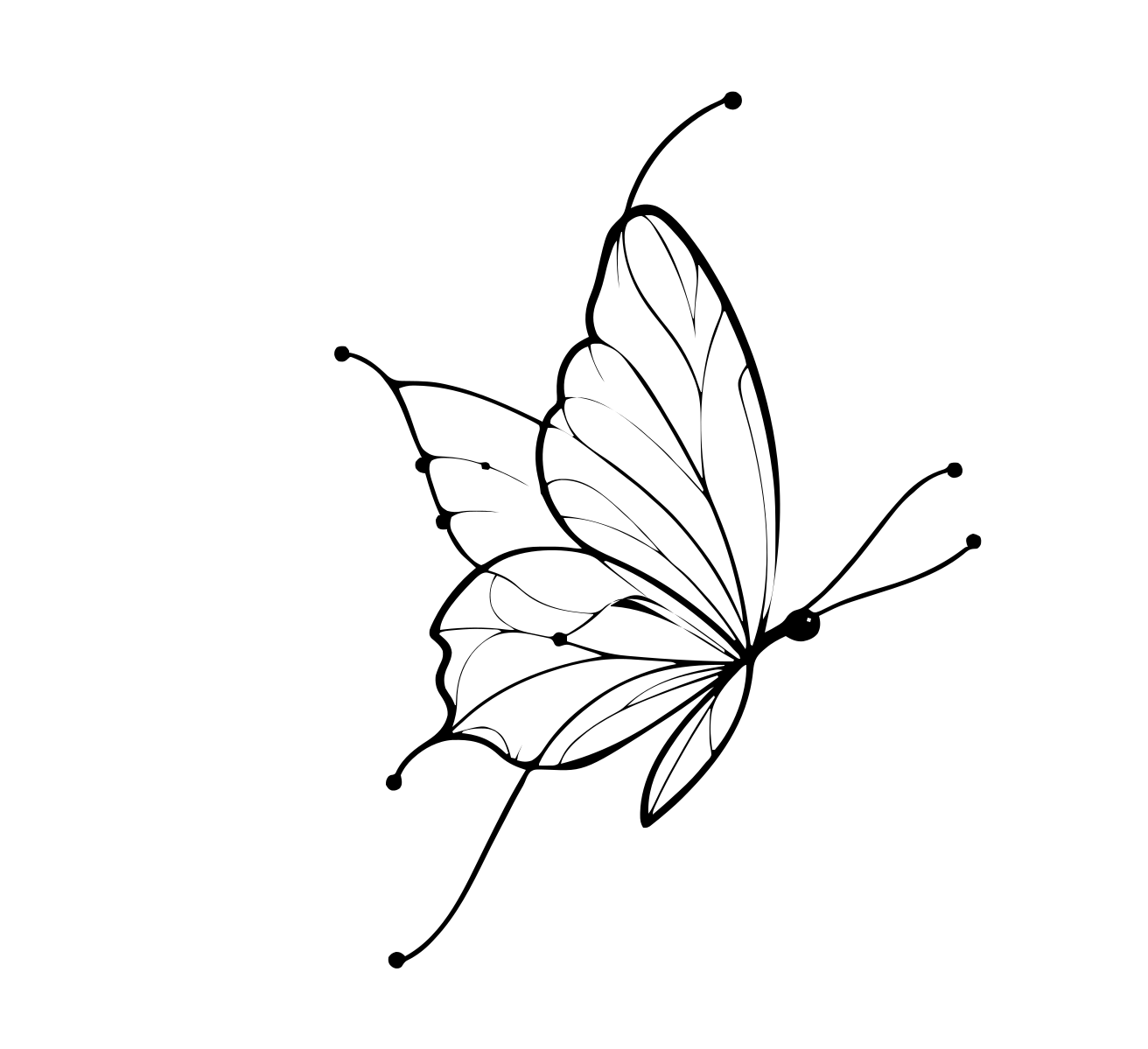
The most noticeable line runs upward through the upper wing. The thin veins follow that movement, while the scalloped lower edge gives the design a softer counterweight. This is a side-view composition, so it does not depend on four evenly spread wings. Its appeal comes from the sense of a small, angled gesture.
The few dots and trailing ends add lightness, but they also increase the overall footprint. When measuring or comparing a paper print, include those details. The wing itself may fit comfortably in a small area while the outermost dot sits much farther away. Decide whether those extensions are essential or optional.
Place it with the whole ankle in view
Begin with a normal standing view, then look from the side and while seated. The reference shows the outside ankle, where the motif sits above the bracelet line. A similar drawing on the inner ankle would have a different relationship to the foot and leg, even if the image were unchanged.
Try a paper layout with the wing pointing up the leg, then tilt it a little toward the front. The first can feel taller; the second can feel more in motion. Choose using the placement itself, not just the isolated drawing. If you regularly wear an anklet, bring it to the consultation so the two elements can be considered together.
Leave a visual margin around jewelry
There is a clear interval between the lower decorative line and the bracelet in the supplied image. That gap allows the butterfly to remain a separate focal point. If the tattoo and jewelry touch visually, a viewer may read them as one connected design even when that was not intended.
A shoe edge, sock height, or trouser hem can change how much of the motif you see in daily life. You can check that with normal clothing before choosing a position. These are composition considerations rather than promises about suitability. Your artist should assess the placement and explain any practical limits relevant to you.
Ask for a drawing that reads at its real size
On a screen, every tiny vein can look important. In the final drawing, the silhouette and main divisions should do most of the work. Ask to compare the full reference with a version that uses fewer interior veins. The lighter version may communicate the same movement more clearly.
Do not choose a line weight from a photograph alone. Lighting and enlargement can make a line appear finer than it is. Ask the artist how they would translate the motif and request relevant examples of their finished work. A discussion about contrast and spacing is more productive than insisting on an online label such as micro or ultra-fine.
Keep a small consultation kit
The free files at the end of this guide give you a reconstructed isolated motif, a JPEG, a simplified SVG trace, and printable reference sheets. They are useful for checking the angle against your own ankle. The original placement image is included so you can compare the wing shape and decorative ends.
Write three notes on the sheet: which ankle, which direction, and whether you want the dots. Leave the final size and transfer drawing to the artist. The reference cannot establish exact dimensions from the photograph and should not be treated as a ready-to-apply stencil.
A few useful answers
Can I wear the design without an anklet?
Yes. The bracelet is styling in the source image. The butterfly is a separate motif and does not require jewelry to make sense.
Does this photograph show the exact tattoo size?
No. There is no reliable scale reference. Use the printable sheet to compare possible sizes and let your artist determine a suitable final drawing.
Yours to take to the artist
Your free reference pack.
Keep the idea, mark your preferences, and discuss the final drawing with your artist. Includes PNG, JPEG, a simplified SVG trace, A4 and US Letter sheets, and the supplied source image.
Download the free reference packA reconstructed artist reference, not exact original artwork or an approved stencil. The SVG simplifies detail. Personal-use terms apply.
Editorial note: this is visual analysis of a supplied illustrative design. Suggested meanings are personal interpretations. Reconstructed references may differ from the source and need artist review. This is not medical advice, tattooing instruction, or evidence of healed results.
Build your artist brief · Compare placements · Suggest a correction