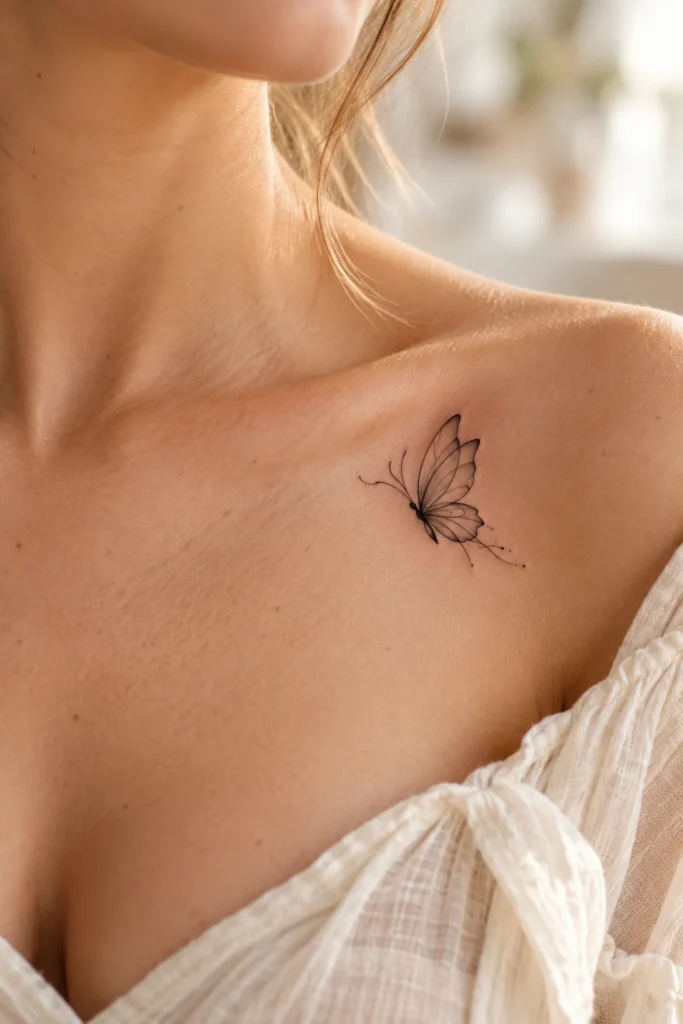
| Defining detail | Tall side-view wing |
| Composition | Diagonal with a light trailing line |
| Daily context | Necklines and necklaces |
| Compare | Close crop and full shoulder view |
Follow the main diagonal
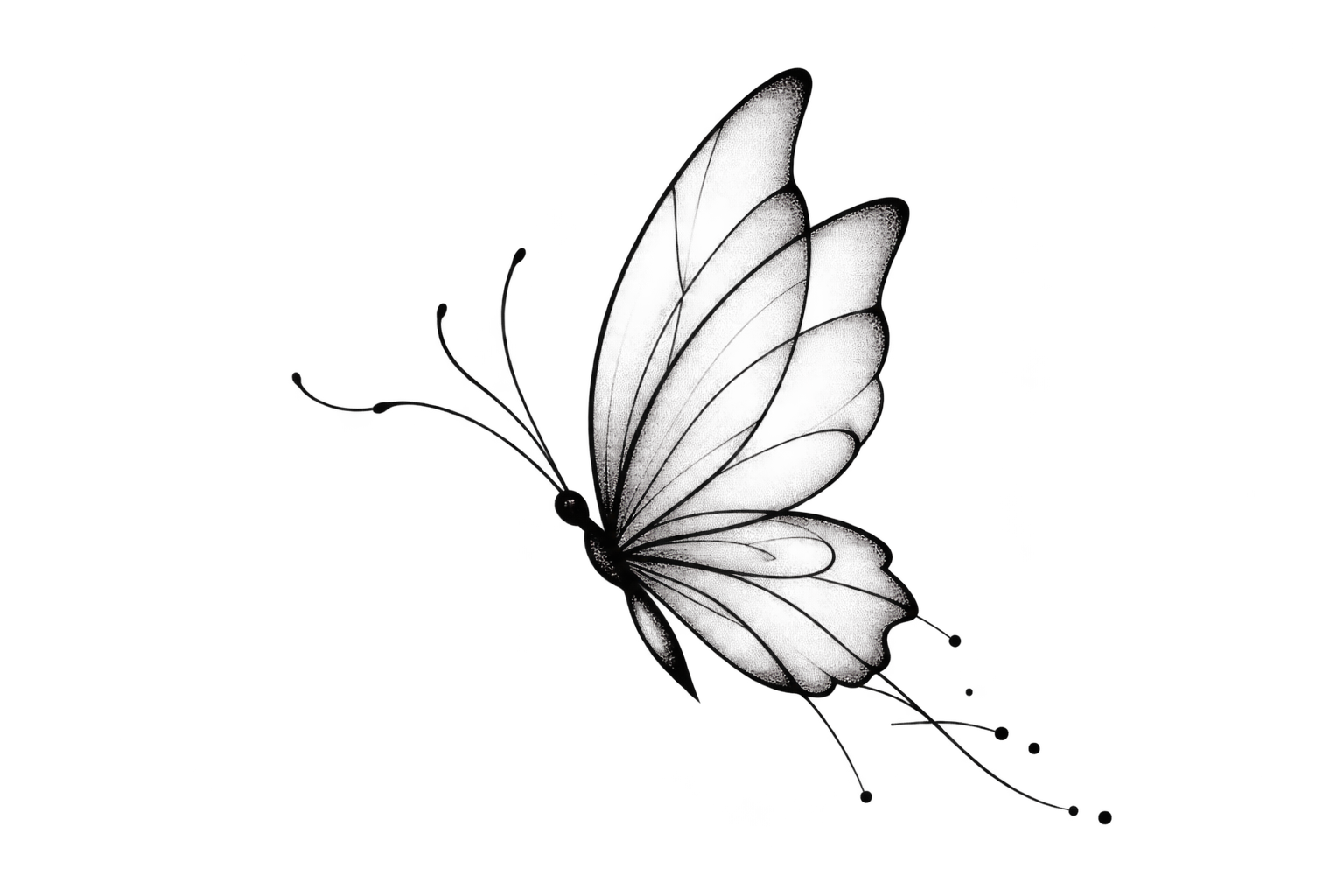
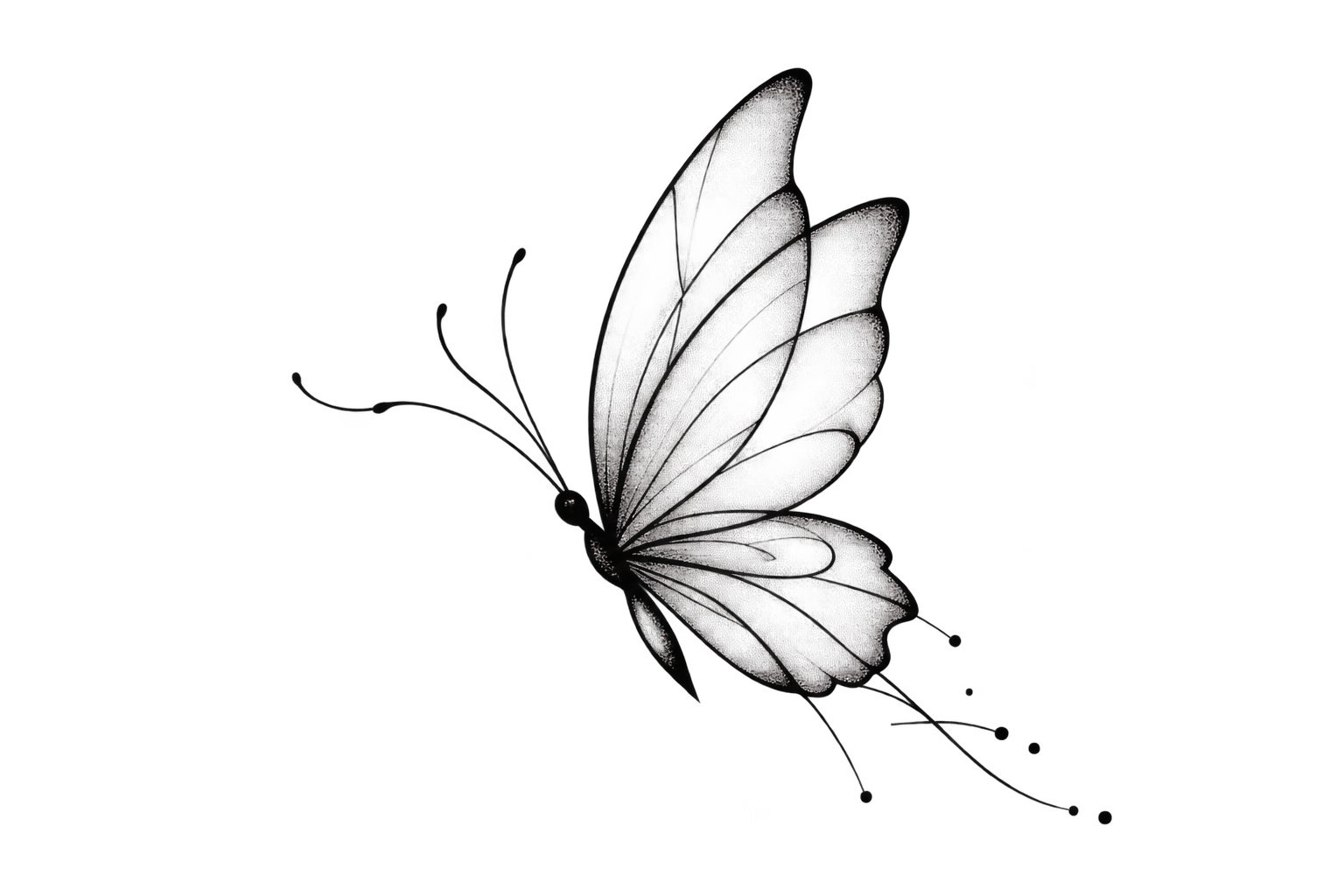
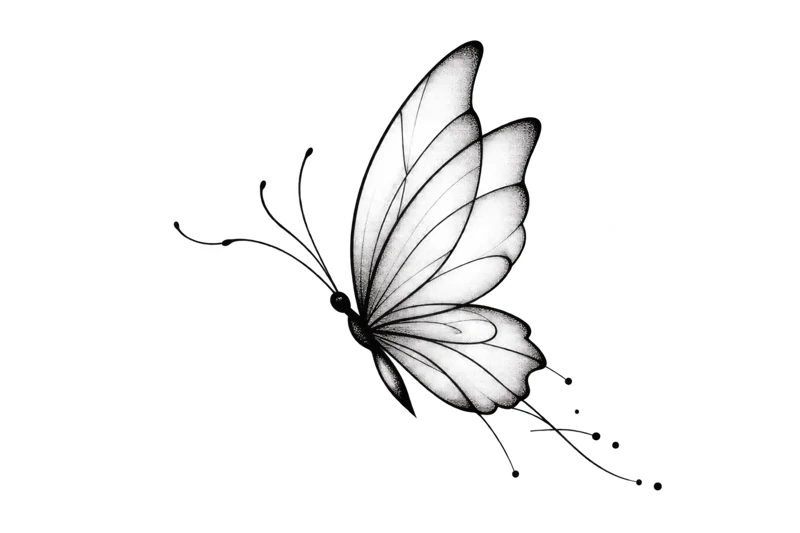
The tall upper wing draws the eye upward, while the scalloped lower wing and dotted ends extend the composition in the opposite direction. The body sits near their meeting point rather than at the geometric center of a square. That creates a gentle sweep across the reference.
The wing veins are finer than the outer contour. Light shading keeps the wing panels from becoming visually flat, but the shape remains readable without heavy fill. If you want a cleaner version, keep the outer silhouette and a few main veins. The design's direction matters more than preserving every faint patch of shading.
Look at necklines you actually wear
A wide neckline reveals the entire reference; another garment might show only the upper wing. Try the paper layout with a few normal outfits. Decide whether you want the tattoo to be fully visible, occasionally visible, or mostly private. That is a useful design choice to make before fixing its position.
Avoid choosing placement from a tightly cropped picture alone. Look at the full shoulder and upper chest in a mirror with your posture relaxed. A drawing that looks centered in a close crop can feel disconnected in the wider view. The artist can help adjust the angle so the image relates to the body rather than the camera framing.
Use trailing details selectively
The fine lines and dots beneath the butterfly give it a sense of motion. They also make the design taller and less self-contained. If you want a compact piece, remove or shorten the trail. If you like the airy composition, preserve some distance between the lower wing and the last dot.
A floral stem, name, or constellation would create a different composition, not just an extra finishing touch. Ask for a separate sketch if you want one of those additions. Comparing two complete drawings is easier than trying to imagine several additions on top of the same reference at once.
Keep the consultation visual and specific
Show your artist the placement image and identify the three things you like most: the tilt, the side-view wings, or the open space around the motif. Then say what you do not need. A clear brief helps the artist adapt the image without guessing which tiny feature is most important to you.
Ask to see the proposed size and orientation while you stand normally. Review it from the front and a slight angle. The reference photograph cannot establish an exact measurement, and it does not demonstrate how the design will look with your own proportions. Treat the photo as a composition study rather than a template for a fixed location.
Take the reference away for a second look
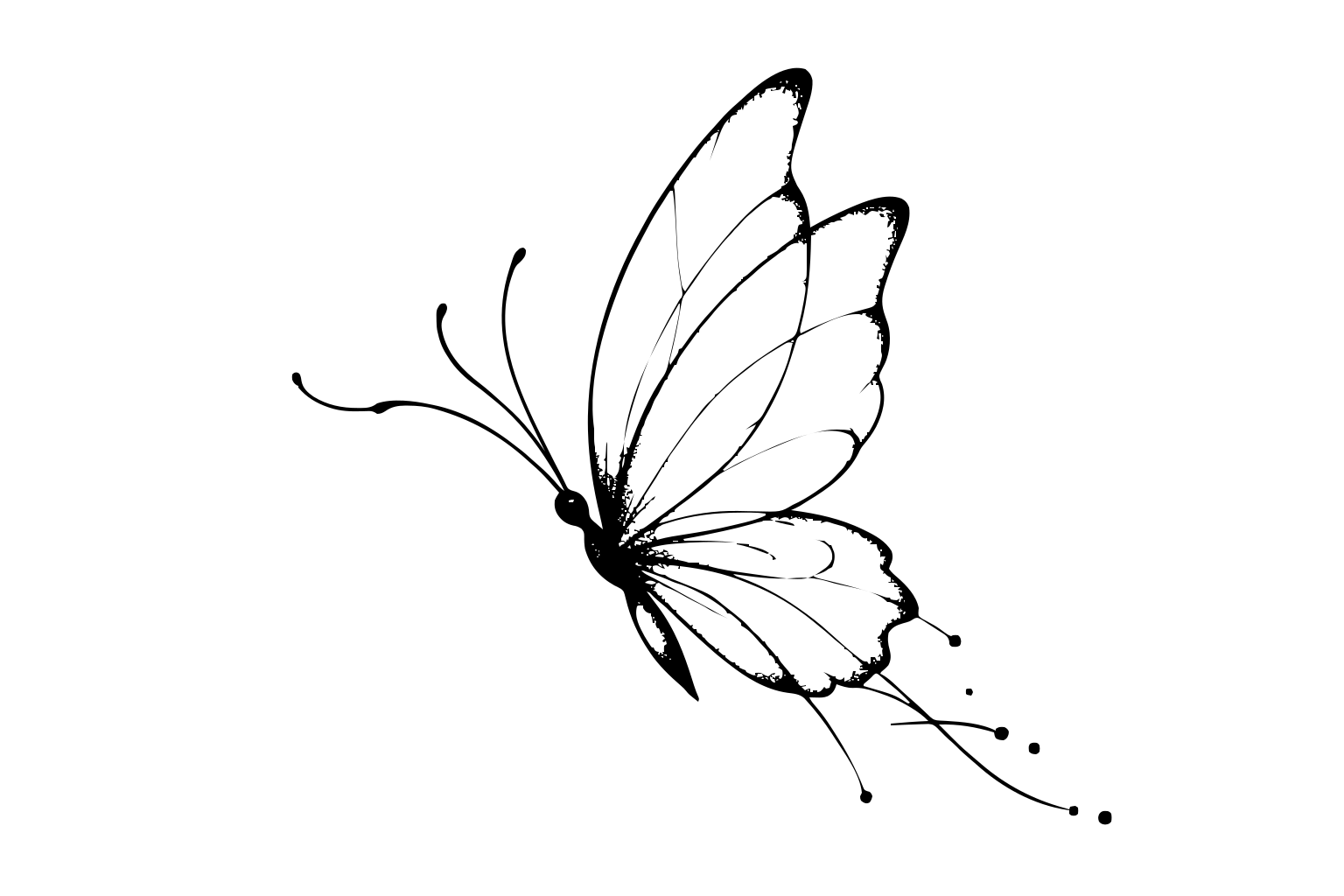
The free pack below includes a reconstructed transparent motif, a JPEG, a simplified SVG trace, and printable reference sheets. Compare the wing contours and trailing details with the original supplied image. A reconstruction can preserve the idea while changing some small line relationships.
Use the sheet to record the neckline test and your preferred rotation. If the first layout feels too busy, ask to remove a detail before making the whole tattoo smaller. The final artist-approved drawing should fit your own placement; the reference files are for discussion and planning.
A few useful answers
Does it need to sit directly on the collarbone?
No. The reference is near the collarbone. Your artist can compare nearby positions and assess what is appropriate for your own placement.
Should I add a necklace-like dotted line?
That would change the composition considerably. Try a separate drawing and check it with the necklaces and necklines you normally wear.
Yours to take to the artist
Your free reference pack.
Keep the idea, mark your preferences, and discuss the final drawing with your artist. Includes PNG, JPEG, a simplified SVG trace, A4 and US Letter sheets, and the supplied source image.
Download the free reference packA reconstructed artist reference, not exact original artwork or an approved stencil. The SVG simplifies detail. Personal-use terms apply.
Editorial note: this is visual analysis of a supplied illustrative design. Suggested meanings are personal interpretations. Reconstructed references may differ from the source and need artist review. This is not medical advice, tattooing instruction, or evidence of healed results.
Build your artist brief · Compare placements · Suggest a correction