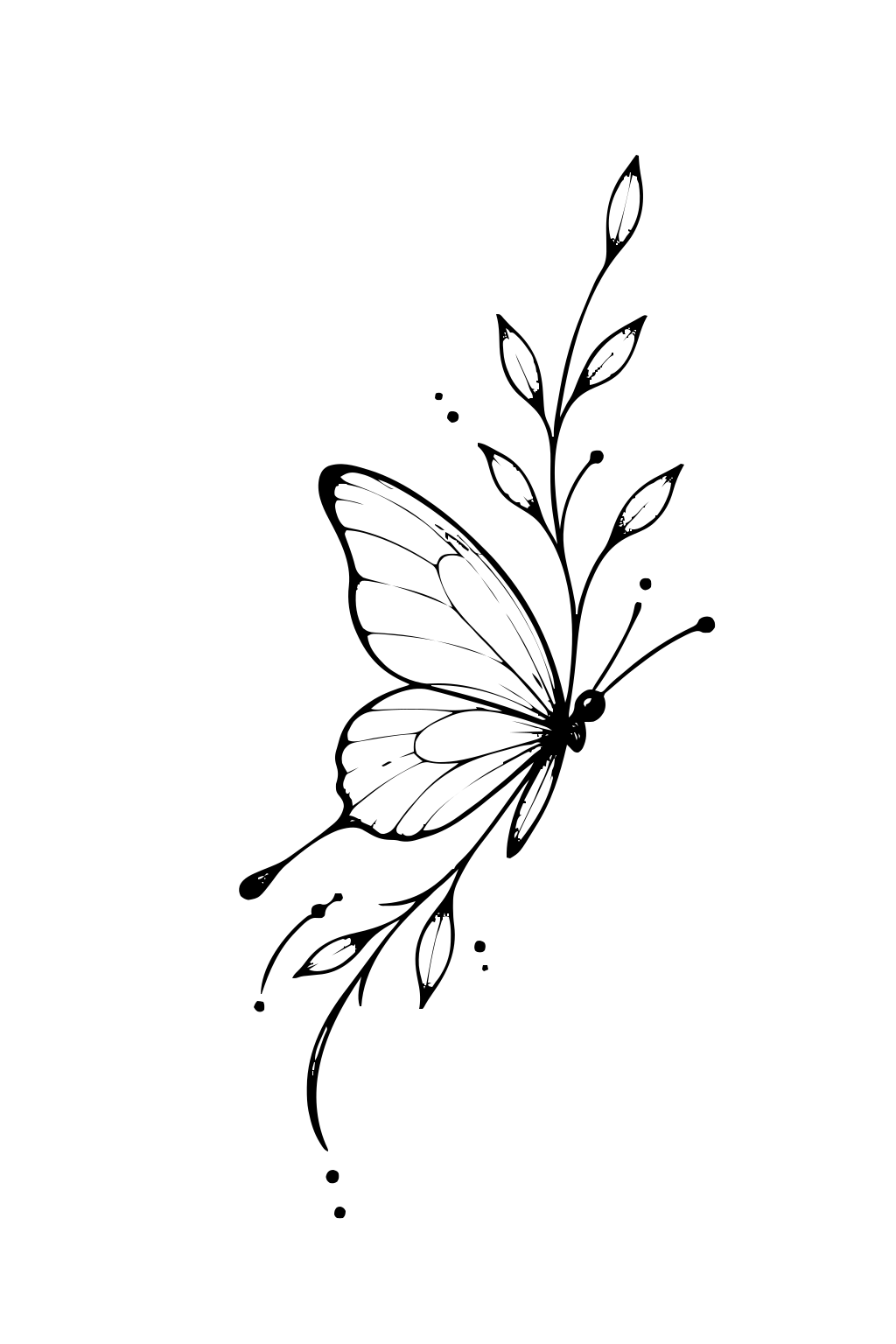
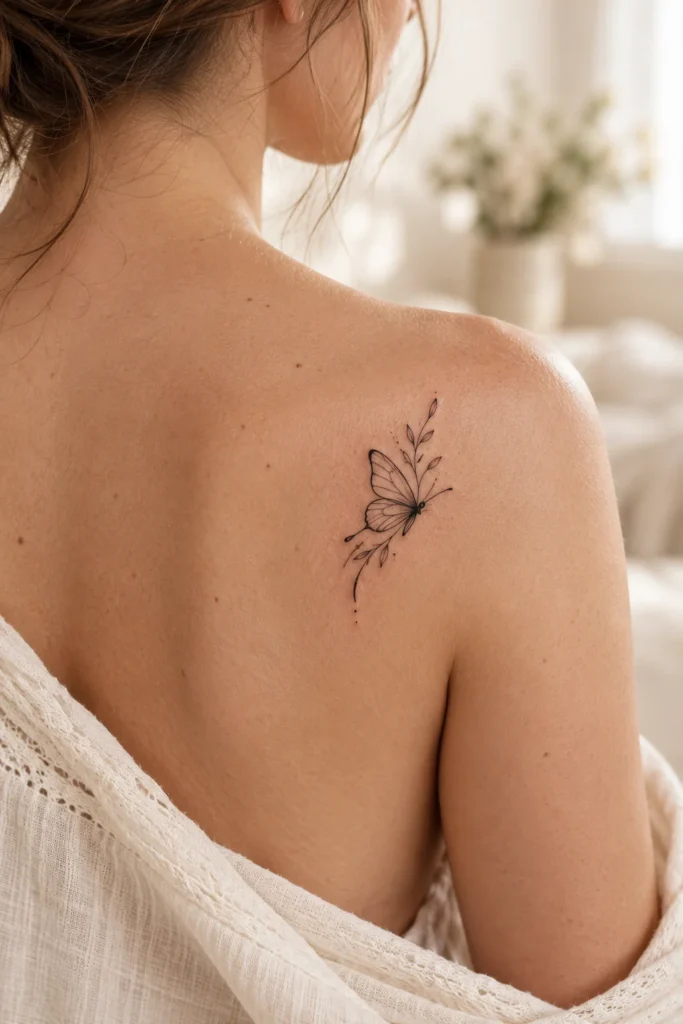
| Defining detail | Butterfly along a leafy stem |
| Overall shape | Tall and slender |
| Plant identity | Stylized, not verified |
| Measure | Leaf tip to trailing-line end |
Look for the shared line
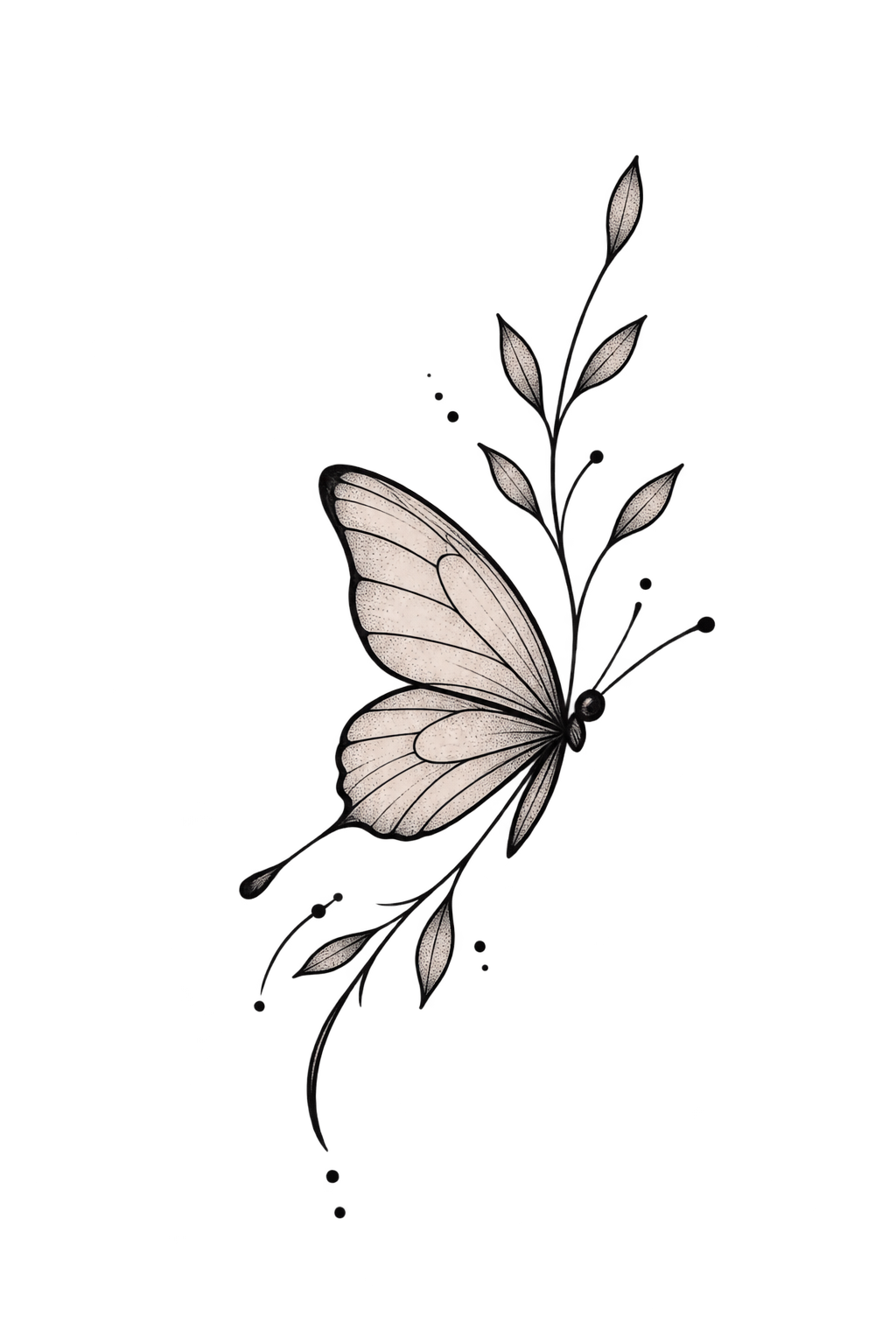
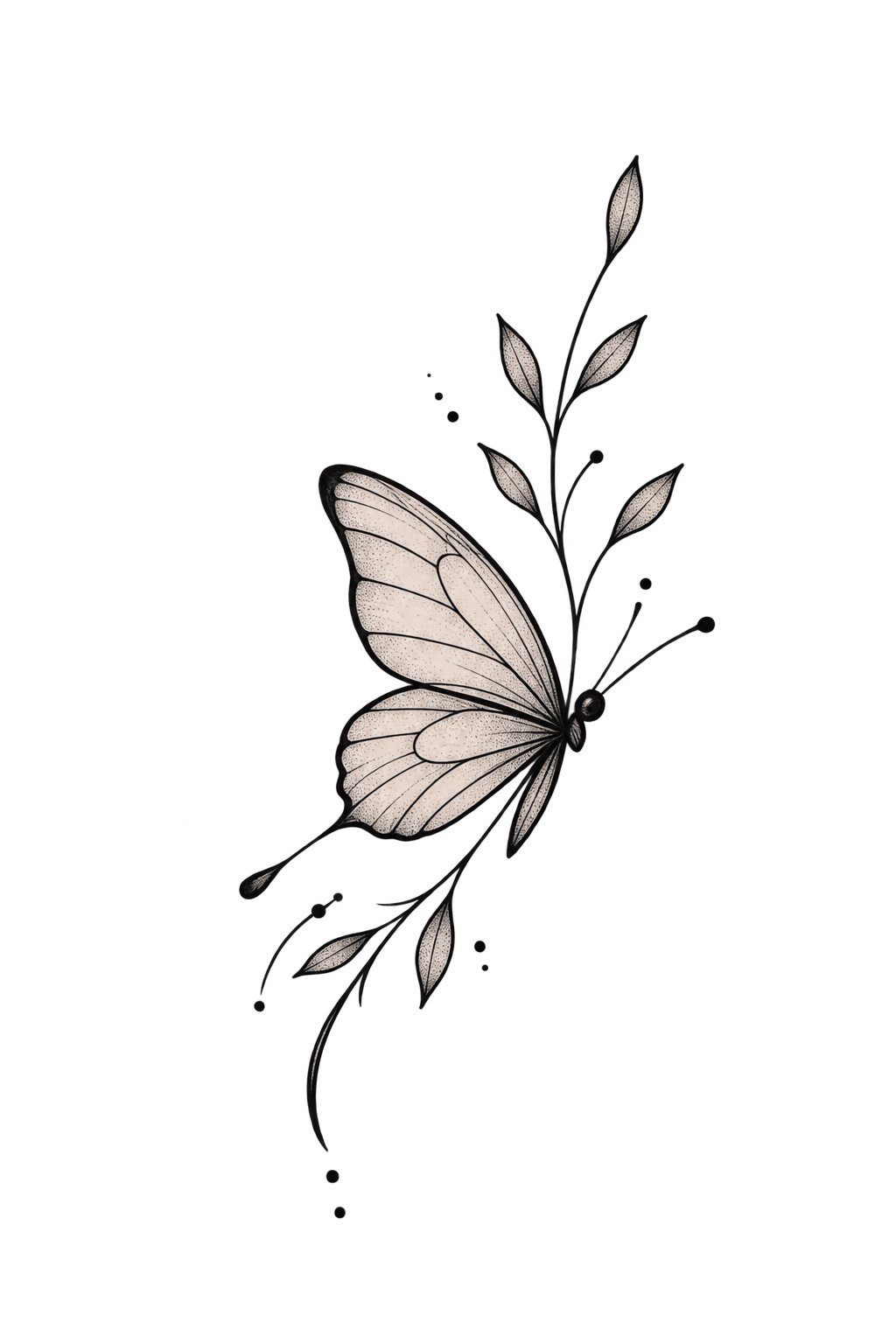
The leafy stem rises beside the butterfly, while its lower curve continues beneath the wings. Those two movements make the piece feel connected. The leaves are spaced rather than packed into a wreath, allowing the wing outline to remain the central point of interest.
Notice the difference between the broad wing shapes and the narrow botanical marks. They create contrast without needing color. If you replace the stem with a particular plant, preserve that difference in scale. Large blossoms or dense foliage could overwhelm the small butterfly and create a substantially different design.
Choose a plant carefully if it matters
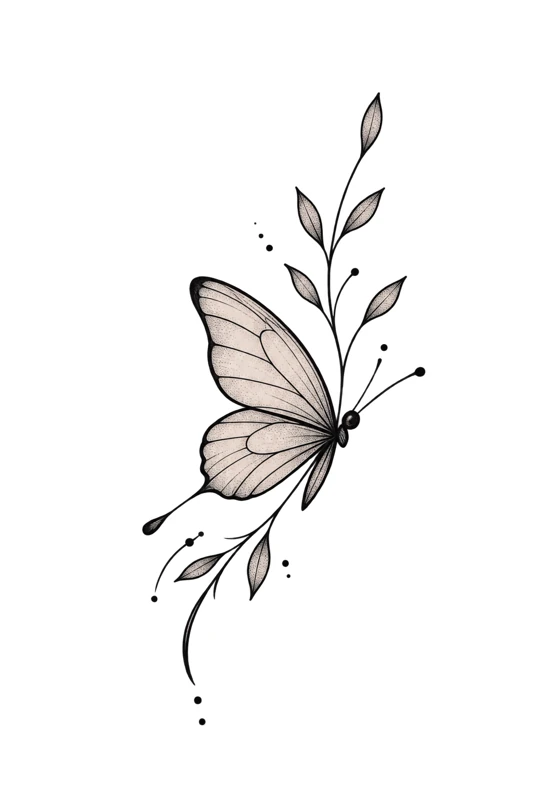
The supplied branch is a stylized botanical element, not a verified drawing of a named species. Do not assume it represents olive, lavender, or another plant simply because it has slim leaves. If a specific plant carries meaning for you, bring a reliable reference and ask the artist to draw recognizable features.
You can also keep the plant intentionally generic. A branch may suggest growth, a garden, or a place you remember without making a botanical claim. Decide whether accuracy or atmosphere matters most. That decision helps the artist choose which leaf shapes and spacing to prioritize.
Measure the full vertical composition
The butterfly occupies only part of the design's height. The upper leaves and lower trailing line extend well beyond it. Include those ends when you compare sizes and positions. A butterfly that appears small in the photograph may be part of a much taller overall piece.
The reference sits toward the back of the shoulder, where the stem can follow a long diagonal or vertical line. A forearm adaptation might work with the same idea, while an ankle version may need fewer leaves. Ask for a fresh layout rather than bending the entire drawing to fit a new area.
Compare it with normal posture and clothing
Look at the proposed placement with your shoulders relaxed and in the clothes you would normally wear. The reference has an open shoulder, which makes the full drawing easy to see. A strap or high neckline could cut across the stem and change the visual balance.
If the piece is intended to appear only occasionally, that can be part of its appeal. If you want the whole composition visible, choose the position accordingly. There is no single correct amount of visibility. Give the artist that context so the final layout reflects your preferences rather than a styled photograph.
Prepare a brief with a clear hierarchy
Write down which element comes first: butterfly, plant, or overall flow. If the butterfly is the priority, keep the leaves as supporting marks. If the plant is personal, the artist may need to redraw the butterfly's position around it. That discussion is more useful than adding multiple symbols at the end.
The free reference pack includes the reconstructed isolated composition and printable sheets. Compare the leaf count, direction, and lower curve with the source image; some fine details may differ. The SVG is a simplified vector trace for layout. Your artist should make and approve the final botanical drawing.
A few useful answers
Is the branch an olive branch?
The image does not establish a species. Use a verified botanical reference if you want an unmistakable olive branch or another specific plant.
Can I use a birth flower instead?
Yes, as a new adaptation. A flower can change the height, weight, and direction of the piece, so request a complete revised composition.
Yours to take to the artist
Your free reference pack.
Keep the idea, mark your preferences, and discuss the final drawing with your artist. Includes PNG, JPEG, a simplified SVG trace, A4 and US Letter sheets, and the supplied source image.
Download the free reference packA reconstructed artist reference, not exact original artwork or an approved stencil. The SVG simplifies detail. Personal-use terms apply.
Editorial note: this is visual analysis of a supplied illustrative design. Suggested meanings are personal interpretations. Reconstructed references may differ from the source and need artist review. This is not medical advice, tattooing instruction, or evidence of healed results.
Build your artist brief · Compare placements · Suggest a correction